Operations
Pitch types: how to structure what you sell
Too few pitch types and you undersell your best spots. Too many and nobody, including your booking system, can keep track. How to find the structure that fits your field.
 JackCo-founder
2 min read
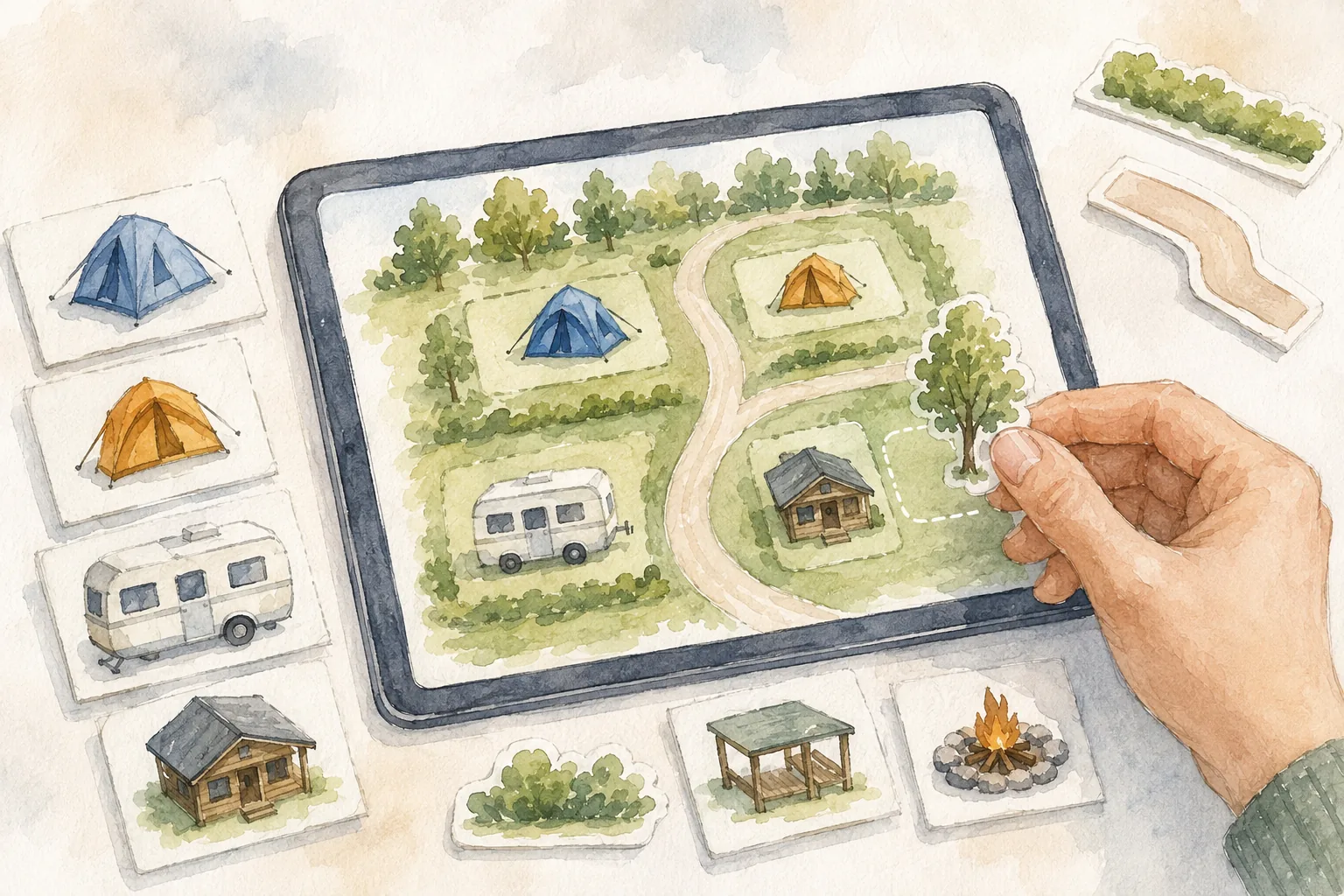
Ask a campsite owner how many kinds of pitch they have and you get one of two answers. Either "pitches are pitches" or a ten-minute tour of every corner of the field. Both answers cost money. The structure of your pitch types decides what you can charge, what guests can book, and how often you end up shuffling arrivals around on a Friday afternoon.
What a pitch type actually is
A pitch type is a promise you can always keep. That is the whole rule. If you sell "Large hardstanding with electric", every pitch in that group must genuinely fit an 8-metre van with an awning and have a working hook-up, because you do not control which one the booking lands on.
The moment one pitch in a group cannot keep the promise, either fix the pitch or move it to a different type.
The structure most sites converge on
After enough seasons, most mixed sites end up with a version of this:
- Grass tent pitch (no electric)
- Grass pitch with electric
- Hardstanding with electric
- Large or premium pitches (the view, the corner spots, extra space)
- Fixed accommodation (pods, statics, bell tents), each type its own product
Five or six types covers almost any field. If you have more than eight, you have probably turned pitch quirks into products, and your availability calendar will be gruyère by June.
Premium pitches are found money
Every site has four or five pitches guests ask for by number: the ones by the stream, the corner with the view, the big one near the gate. If guests are asking for specific pitches, they are telling you those pitches are underpriced.
Split them into a premium type and charge £4 to £8 more a night. They will still sell first. We have watched sites add four figures a season with this one change and precisely zero complaints, because the guests who care get certainty and the guests who do not are unaffected.
Bookable-by-pitch or bookable-by-type?
Letting guests choose an exact numbered pitch feels generous but constrains you: you cannot shuffle bookings to close gaps, so you sell fewer total nights from the same field. Selling by type keeps you free to tessellate.
The compromise that works: sell by type, then take pitch requests as a note. Regulars who want pitch 12 usually get pitch 12, but the calendar stays yours to optimise.
Describe types like a guest, not a groundsman
Guests do not know what "serviced super pitch" means. Every type needs:
- A name a first-timer understands.
- Dimensions and what fits: "van plus awning plus car".
- What is included: electric, water tap distance, whether dogs are allowed.
- One honest photo of a typical pitch of that type, occupied.
The photography advice in our photo guide applies double here.
Revisit the mix every autumn
Pitch types are not a one-off decision. Each autumn, check which types sold out early and which lingered, and whether the gap between grass and hardstanding pricing still reflects demand. Two grass pitches converted to hardstanding is often the best-returning project on the winter list.
In Pillowcase, pitch types drive everything: pricing bands, the booking page, and what syncs to listing sites. Get the structure right once and every season after inherits it.