Camping tips
Stargazing camping trips, how to plan a night under dark skies
Long nights make late autumn and winter the best time to camp under the stars. How to pick a dark site, time your trip and stay comfortable while you look up.
 JackCo-founder
3 min read
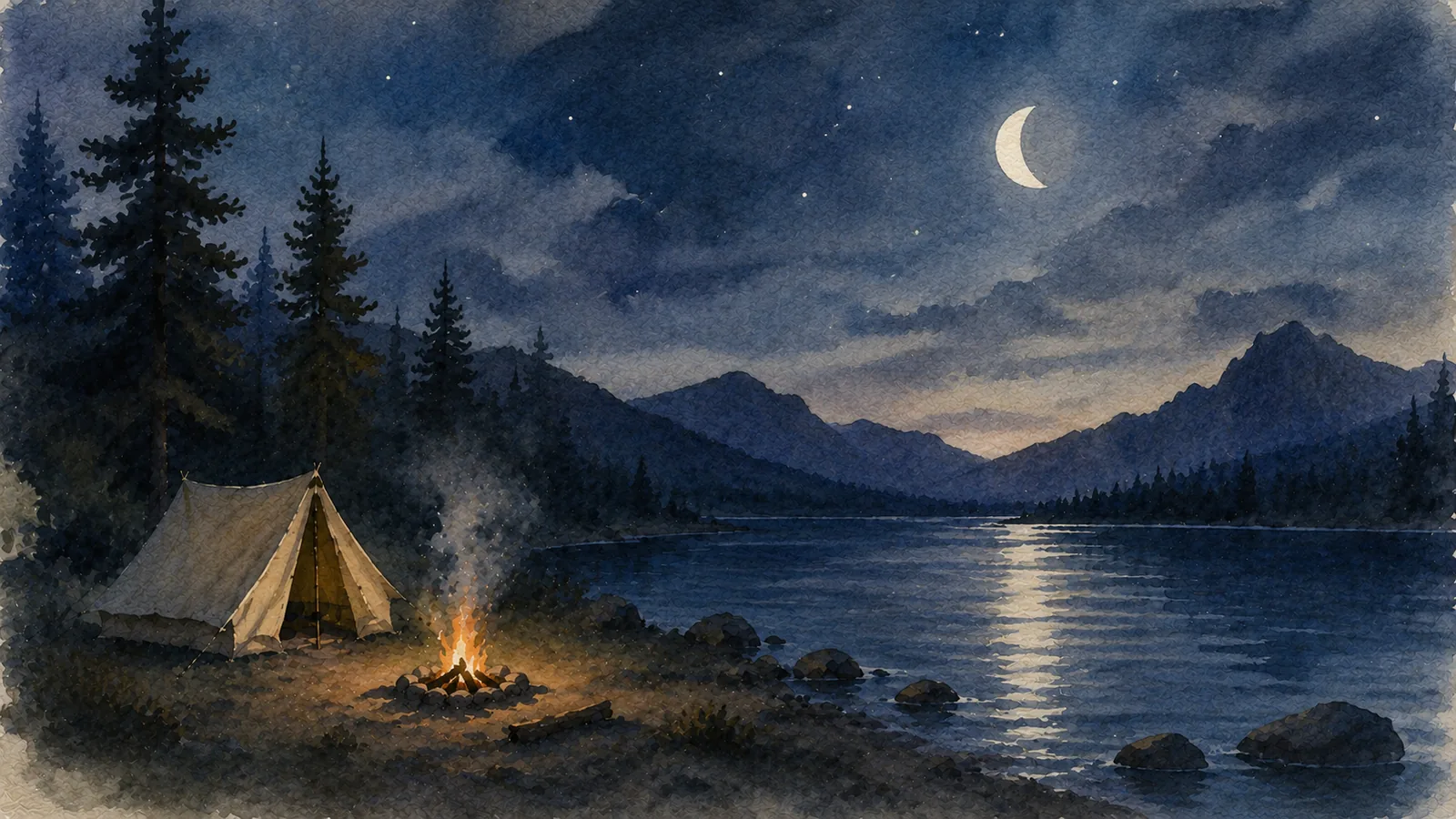
One of the quiet pleasures of camping is the moment you step out of the tent late at night, look up, and realise how many stars you have been missing at home. Most of us live under skies washed out by street lights. A campsite a few miles from the nearest town can show you a few thousand more.
The darker half of the year is the best time for it. It is properly dark by early evening, so you do not need to stay up past midnight, and children can join in before bed. With a little planning, a stargazing night can be the highlight of a trip.
Pick somewhere properly dark
Darkness matters more than anything else you bring. The UK has a good spread of places recognised for their night skies, including Northumberland and Kielder, Galloway Forest, Exmoor, Bannau Brycheiniog (the Brecon Beacons), Eryri (Snowdonia), the Yorkshire Dales, the North York Moors and the South Downs.
You do not need an official badge, though. Look for a site that is:
- Well away from towns and main roads, ideally with a hill between you and the nearest glow.
- Low on its own lighting. Ask whether paths and facilities are lit all night or on sensors.
- Open to the sky. A woodland pitch is lovely and sheltered, but you want a clear view, especially to the south.
Several of the sites in our guides to the Scottish Highlands and the Yorkshire Dales sit under very dark skies.
Time it around the moon
A bright moon washes out faint stars almost as well as a street light. Before you book, check a moon phase calendar and aim for the week around the new moon. If your dates are fixed, find out when the moon rises and sets, since a moon that sets early still leaves you a dark late evening.
A few things are worth planning around:
- Meteor showers. The Perseids in August and the Geminids in December are the most reliable, and both are easy to watch without equipment.
- The Milky Way, which is at its most striking on late summer and autumn evenings.
- Bright planets, which are visible even on moonlit nights and are a good first target for children.
The weather has the final say. Keep plans flexible, and if you are staying two or three nights, treat any clear one as the night.
Let your eyes adjust
Your eyes need around 20 minutes in the dark to reach their full sensitivity, and a single glance at a phone screen undoes it. A few habits help:
- Use a torch with a red light setting, or cover an ordinary one with red film.
- Turn your phone brightness right down and switch on its night mode.
- Turn off lanterns and awning lights, and sit with your back to any glow from the site.
It is good manners too. Other campers may be doing the same, and a head torch swept across the field at full beam is not a friendly act.
What to bring
You need far less kit than you might think.
- A reclining chair or a thick mat and blanket. Looking straight up from a standing position gets uncomfortable quickly.
- Binoculars, if you have them. An ordinary pair will show you the craters of the Moon, the moons of Jupiter and star clusters, and is easier to use than a first telescope.
- A star chart or an app with a night mode, to help you find your way around.
- A flask of something hot.
Dress for standing still
Stargazing is colder than walking, because you are not moving. Wear one more layer than you think you need, plus a hat, gloves and warm socks, and put something insulating between you and the ground. Our guide to winter camping in the UK covers sleeping warm once you head back to the tent.
Start with the easy sights
A long checklist is not the point. On a first night, find the Plough and follow its two end stars to the North Star. In winter, look for Orion and the three stars of his belt, then the small, tight cluster of the Pleiades nearby. Then simply lie back for half an hour and see what crosses the sky.
Before you book
Check that the site is open in the darker months, ask about lighting, and choose a pitch with an open view if you are given the choice. When you are ready, find a campsite somewhere far from the street lights, and give yourself a couple of nights for the clouds to cooperate.