Direct bookings
Listing sites and your own booking page: getting the balance right
Listing sites find you new guests and your own page keeps them. How to run both channels without double bookings, and where the commission maths lands.
 JackCo-founder
3 min read
Whenever I talk to campsite owners about listing sites, I hear two camps. One says the commission is robbery and they want off entirely. The other shrugs that Pitchup fills the field, so why bother with a website. After twenty years around my family's site, I am convinced both camps are wrong, and that the sites doing best run both channels deliberately.
What each channel is actually for
A listing site is a discovery machine. It spends more on marketing in a week than a campsite spends in a decade, and it puts your pitches in front of people who have never heard of you. That reach is genuinely worth paying for, once per guest.
Your own booking page is a loyalty machine. It takes the guest the listing site found, and keeps every one of their future stays at full margin. It is also where you control the whole experience: your photos, your policies, your prices, your relationship.
The mistake is asking either channel to do the other's job. Marketing your own page to strangers is slow; paying commission on a regular's eighth visit is throwing money away.
The commission maths, honestly
Take a £400 family booking. Through a listing site at a typical 10 to 20 percent, you hand over £40 to £80. For a brand-new guest, that can be fair value: you paid for marketing you could not have done yourself.
Now run the same family forward five summers. If every stay goes through the platform, that one relationship costs you several hundred pounds in commission for marketing that stopped being needed after year one. If stays two through five come direct, the same relationship costs you almost nothing. The whole game is moving guests from column one to column two after their first visit. I set out the wider case in our thoughts on direct bookings.
Never run two calendars by hand
The operational trap in running both channels is the double booking. If your own page and a listing site each sell from their own copy of availability, eventually both sell the last hardstanding on the same August Saturday, and you spend a bank holiday weekend ringing a family to un-book their holiday.
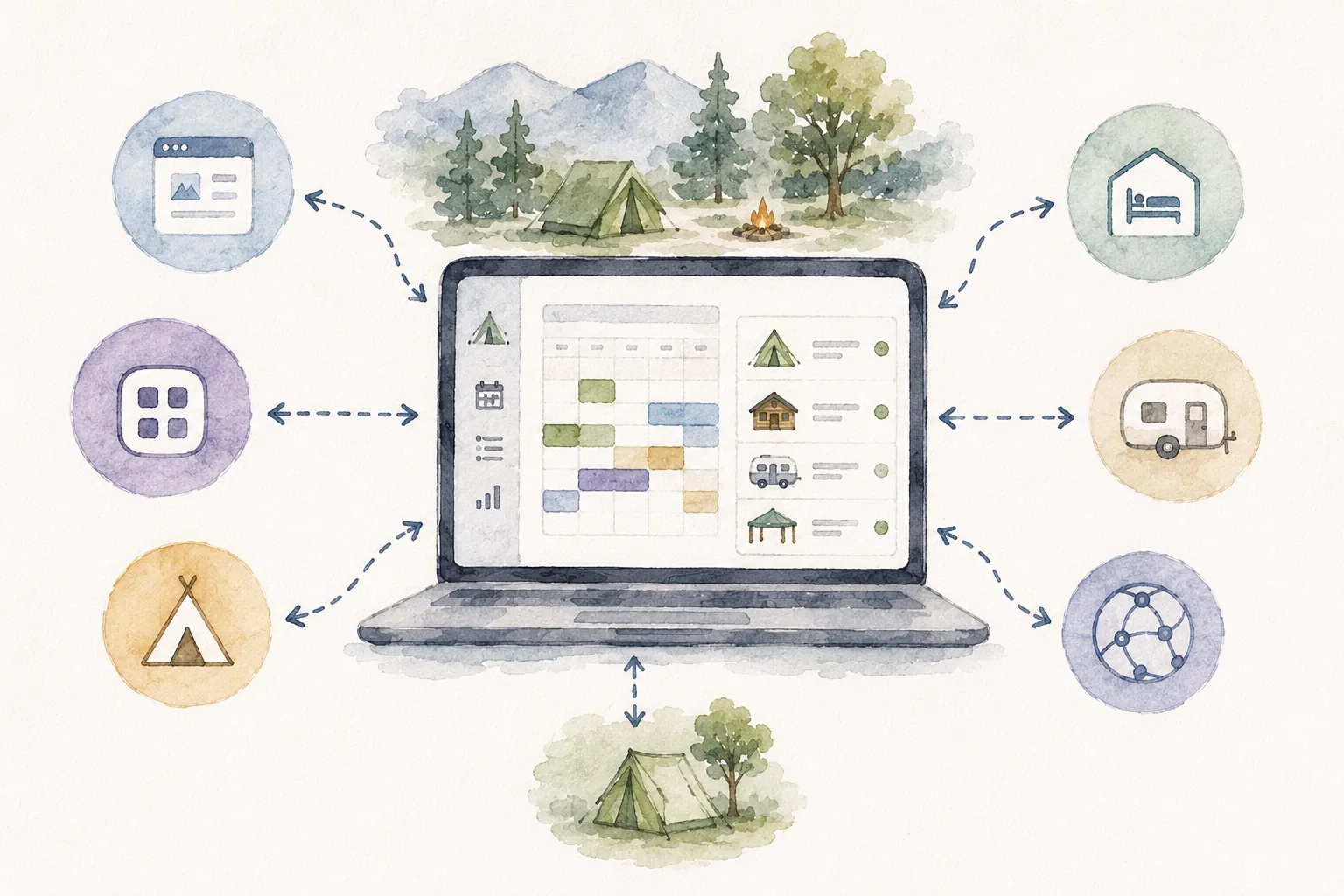
The fix is one calendar that both channels read and write, with availability synced both ways automatically. When a Pitchup booking lands, your own page stops selling that pitch within moments, and vice versa. This is not a luxury feature; it is the precondition for running two channels at all. Pillowcase does this with two-way Pitchup sync as standard, and whatever system you use, insist on seeing the sync demonstrated, not described.
Keep your prices consistent
Price your pitches the same on every channel. Undercutting the listing site on your own page feels clever, but platforms police it, guests who notice feel gamed, and it muddies your own reporting. The direct channel should win on relationship and experience, not on a sneaky discount:
- Returning guests book before public release.
- Amendments are friendlier and free where you can afford it.
- The confirmation email, the pre-arrival guide and the welcome all carry your name, not a platform's.
Turning platform guests into direct guests
The conversion happens on site and just after, not at booking time:
- Your website on everything: signage, wifi landing page, receipts, the side of the shop.
- A goodbye email (yours, not the platform's, where terms allow) with next season's opening date.
- A returning-guest week: your best pitches, released to past guests first.
- Simply asking at checkout. "Book with us directly next time and you deal with me, not a call centre" converts remarkably well.
Do that consistently and the split drifts the right way each season: platforms feeding the top of the funnel, your own page at £70 a month and 0% commission quietly compounding the rest.