Direct bookings
Why direct bookings matter more than ever for your campsite
Listing sites bring guests, but they take a cut of every stay and keep the relationship. Here is why building your own direct booking channel is the single best investment a campsite can make.
 JackCo-founder
3 min read
When my parents opened their campsite in 2005, every booking arrived by phone or by post. Twenty years later most guests expect to book a pitch the way they book a hotel room: on their phone, in a couple of minutes, with instant confirmation. The question is not whether you take online bookings. It is whose website those bookings come through.
The real cost of a listing-site booking
Listing sites such as Pitchup and Cool Camping do a genuinely useful job. They put your site in front of people who have never heard of it, and for a new campsite that visibility is worth paying for.
But the commission is only part of the price. When a guest books through a listing site:
- You typically give up 10 to 20 percent of the booking value.
- The guest's relationship is with the listing site, not with you.
- You often cannot email them your own offers next season.
- Your pricing and cancellation terms bend to fit the platform's rules.
A family that spends £400 a year with you, every year, is worth thousands over a decade. If every one of those stays goes through a platform, you pay commission on loyalty you earned yourself.
Direct bookings compound
The economics of a direct channel work in the opposite direction. The first booking from a returning guest costs you nothing in commission. So does the second, and the tenth. Every guest you move from a listing site to your own booking page permanently improves your margin.
There is a service benefit too. When the booking lives in your own system you can see the guest's history, their vehicle, their usual pitch and their dog's name. That is the sort of detail that turns a decent stay into a repeat visit.
What a good direct channel needs
You do not need a complicated website. You need four things:
- A booking page that works on a phone. Most campsite bookings now start on a mobile screen.
- Live availability. If guests have to enquire and wait, half of them book somewhere else in the meantime.
- Online payment. Card payment at the point of booking, into your own account, with the deposit rules you choose.
- Instant confirmation. An automatic email with directions, arrival times and what to bring.
If your current setup is a contact form and a spreadsheet, every one of those is a leak in the bucket.
Use listing sites for discovery, not for loyalty
The strategy that works for the sites we know best is simple: let the listing sites do what they are good at, which is finding you brand-new guests, and make sure everything after that first stay happens directly.
- Put your website on everything a guest touches: confirmation emails, receipts, signage, wifi landing pages.
- Offer returning guests something the platforms cannot, such as early access to peak weeks.
- Collect email addresses (with permission) and send one good newsletter before booking season opens.
We wrote more about balancing the two channels in Listing sites and your own booking page.
Where Pillowcase fits
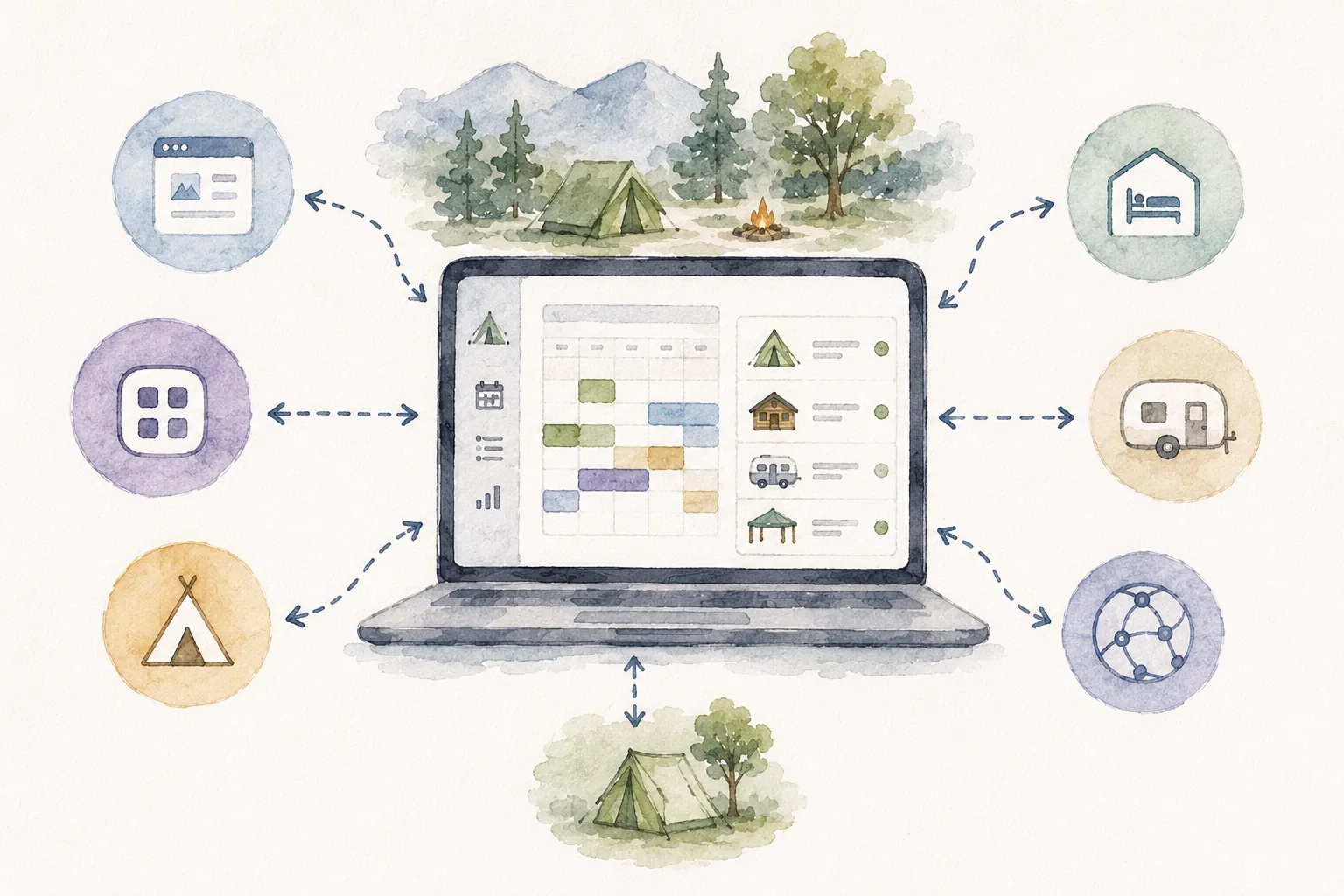
Pillowcase exists to make the direct channel effortless: a booking page under your own brand, live availability from the same calendar that runs your season, and payments straight into your own Stripe account with 0% commission. If a listing site sends you a booking too, it lands in the same calendar, so nothing double-books.
Your guests are already looking for you. Make sure that when they find you, the booking is yours.